
Percutaneous sacroiliac fusion is a minimally invasive surgery to treat SI joint dysfunction. SI joint dysfunction causes lower back, hip, pelvic, and groin pain and results from inadequate motion or inflammation in the joint . Evidence suggests that patients who have previously had a lumbar fusion, a traumatic event like an automobile accident and pregnant women have a higher risk of SI troubles.

Sacroiliac joint problems begin in the lower back but can also involve the pelvis, legs, and groin. Surgery is appropriate when:
If your pain is new onset, doctors won’t immediately jump to surgery. Instead, they will recommend you try non-surgical options, including physical therapy, massage, medications, steroid shots, and more. And remember: no two patients are the same. You may get relief from one, some, all, or none of the non-surgical treatments. Also, be aware that a treatment that works now may not continue to do so.
Diagnosing SI problems is tricky because the muscles and joints in the lower pelvis are interconnected. Sometimes, SI joint difficulties are diagnosed through elimination rather than a positive diagnosis. Testing and evaluation regularly include:
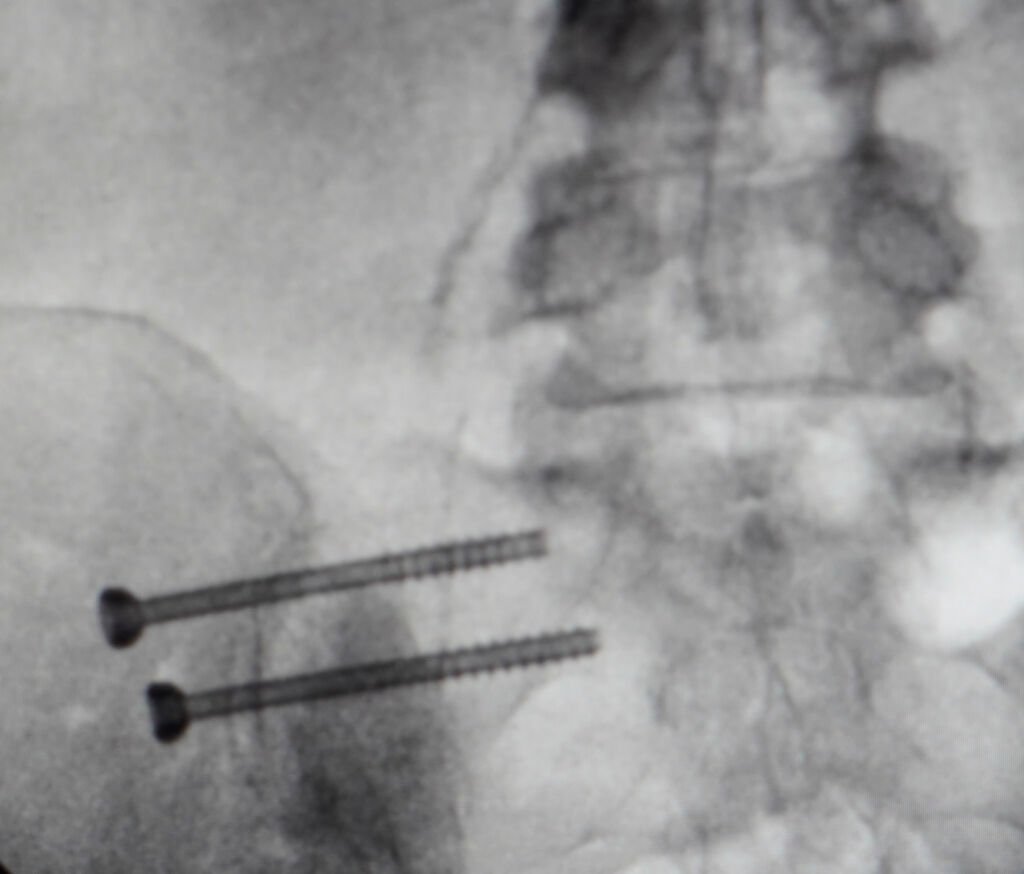
Percutaneous sacroiliac fusion is, as previously stated, a minimally-invasive procedure, performed entirely through a small incision in your buttocks. The surgeon uses a guide pin to make a small hole in your ilium, the large bone that forms the top of your pelvis. The opening is drilled to allow access to the sacrum, which sits at the bottom of your spinal cord.
How the surgery progresses depends on each individual’s situation: bone grafts require cleaning out bone and cartilage before the graft is performed, while implants require screws and pins. The surgical site is irrigated or flushed, and the incision is closed with sutures. Surgery typically takes about an hour and, barring complications, you’ll go home the same day.
Full recovery takes around six months in order to allow the bone to fuse completely, but you can expect to see some symptom alleviation within a few weeks, sometimes immediately.
If you exhibit the following signs upon returning home, contact your doctor:
Professional spinal care and pain care experts are standing by to assist you. If we are not able to answer your question without an on-site appointment, we can schedule one for you.
